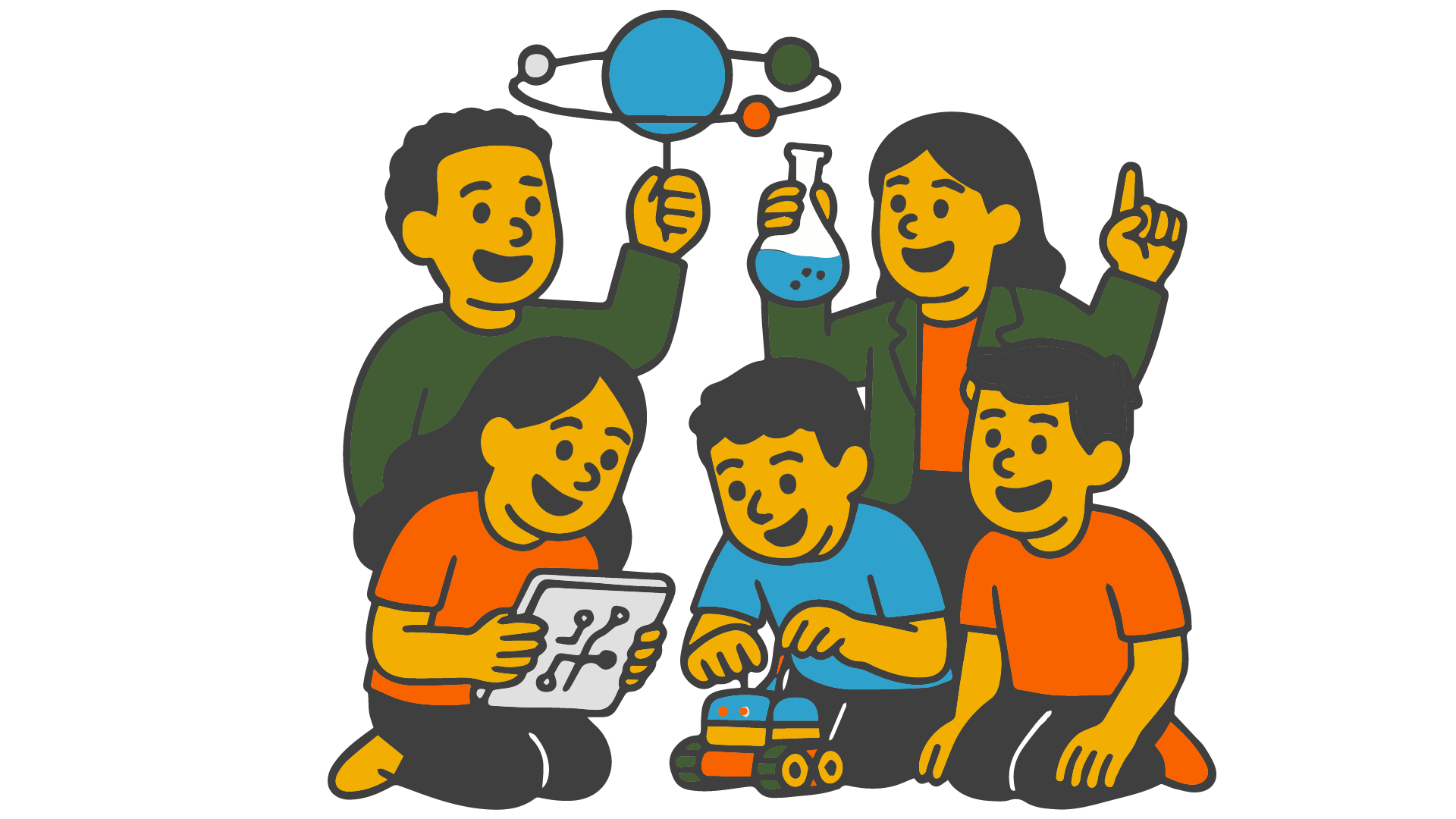
STEM Minds is one of the core education partners behind Crop Help. They are a Canadian social enterprise that designs and delivers STEM and STEAM programs for young people, with a growing focus on AgriTech and sustainable agriculture. Through in person classes, virtual workshops and on demand courses, STEM Minds helps students build confidence with technology while staying grounded in real world problems such as food systems and climate.
This press note introduces who STEM Minds are, why they matter to the future of work and learning, and how the partnership connects directly to Crop Help pilots in schools and community programs.
Who STEM Minds serves
STEM Minds focuses on learners from early primary years through the end of high school. Their programs are built to support:
- families looking for enrichment beyond the school day
- schools that want turnkey STEM and STEAM experiences linked to curriculum
- community organizations that need practical digital skills and AgriTech learning options
Programming spans after school clubs, camps, in school workshops and virtual sessions, with the same goal across each format. Help youth become confident, self directed learners who understand how technology and science show up in everyday life.
Over time, STEM Minds has also expanded into dedicated tracks for older learners and jobseekers who want skills related to AgriTech and emerging technology. That broader lens is part of what makes them a strong partner for Crop Help, where the same tools need to support classroom inquiry and real food growing projects.
Why STEM and STEAM education matter
Across many economies, reports from groups such as the World Economic Forum highlight that a large share of future roles will rely on comfort with science, technology, engineering and mathematics, combined with creativity and communication. STEM Minds responds to that reality by treating STEM as a foundation, not a niche.
Their programs:
- introduce core concepts in coding, robotics, game design, media and AI in age appropriate ways
- emphasize problem solving and collaboration, not only individual achievement
- encourage students to see themselves as creators, not just consumers, of technology
Crucially, they use STEM as a lens on real challenges such as climate resilience, food systems and community wellbeing. That is where the connection to AgriTech and Crop Help emerges most clearly.
The STEM Minds approach
Several features define how STEM Minds designs learning experiences.
First, programs are created and led by certified teachers and technical professionals. This combination means sessions respect pedagogy and classroom realities while still engaging with current tools and industry practices.
Second, content is tested and refined through regular delivery in their flagship space and partner sites before being scaled through online platforms. Feedback from students and educators is used to adjust pacing, activities and supports so that offerings work in diverse classrooms, not just ideal conditions.
Third, the learning environment is intentionally inclusive. STEM Minds works to give every student a safe place to ask questions, experiment and share their perspective. Skill building is paired with confidence building, so learners see a place for themselves in STEM fields regardless of starting point.
STEM, the arts and STEAM Hub
STEM Minds treats the arts as an essential part of future ready education. Many of their programs weave creative disciplines into technical work. Students might script and film a short documentary, design game worlds, or develop digital storytelling projects that rely on both code and narrative.
To support flexible access, STEM Minds created STEAM Hub, an on demand course platform that lets learners explore topics at their own pace. Courses cover robotics, coding, digital media, entrepreneurship and more, with a growing set of offerings that connect technology and sustainability.
This blend of live instruction and self guided learning is important for schools and community groups that need options across different schedules and budgets. It also aligns well with Crop Help, where teachers and youth can move between hands on garden work, in class lessons and independent online exploration.
Connecting STEM Minds and Crop Help
The partnership between STEM Minds and Crop Help brings together complementary strengths.
STEM Minds contributes:
- a deep catalog of STEM and STEAM curriculum and classroom ready activities
- experience working with school boards, youth programs and community partners across regions
- a clear understanding of how to support teachers with limited time and mixed ability groups
Crop Help contributes:
- an AI enabled crop health and task tracking tool designed for gardens and small farms
- a growing library of guides and lessons tied to real observations in the field
- a focus on making agronomy and stewardship feel concrete for youth and community growers
Together, the goal is to turn gardens, grow units and community plots into living classrooms. Students can observe plants, capture images, log issues in Crop Help and then dive into STEM Minds and STEAM Hub resources that unpack the science and technology behind what they see.
What this means for schools and community programs
For educators, this partnership means it is easier to run integrated projects that combine:
- hands on garden or grow unit work
- digital documentation and analysis through Crop Help
- structured STEM and STEAM lessons through STEM Minds and STEAM Hub
Specialist High Skills Major programs, environmental clubs, science classes and community youth programs can all use the same tools, adapted to their age group and goals. Over time, data from Crop Help and reflections from students can feed back into improved curriculum design and new project templates.
For Crop Help, working closely with STEM Minds ensures that new features and content are evaluated through both a farmer lens and an educator lens. That dual view helps keep the product accessible to a Grade eight class on one day and a community farm crew on the next.
Looking ahead
Introducing STEM Minds as a formal partner is an important step in building the wider ecosystem around Crop Help. In the coming seasons, the collaboration is expected to grow through:
- co developed lessons that link specific Crop Help workflows with classroom projects
- shared pilots where data from school and community gardens informs both product decisions and new educational content
- expanded support for AgriTech pathways that connect youth learning with future study and work opportunities
You can learn more about STEM Minds and their work through the external resource entry in our Resources section or by visiting their main site and STEAM Hub platform. For an overview of how all of our partners fit into the Crop Help story, visit the About, Schools, Community and Team pages linked above.