
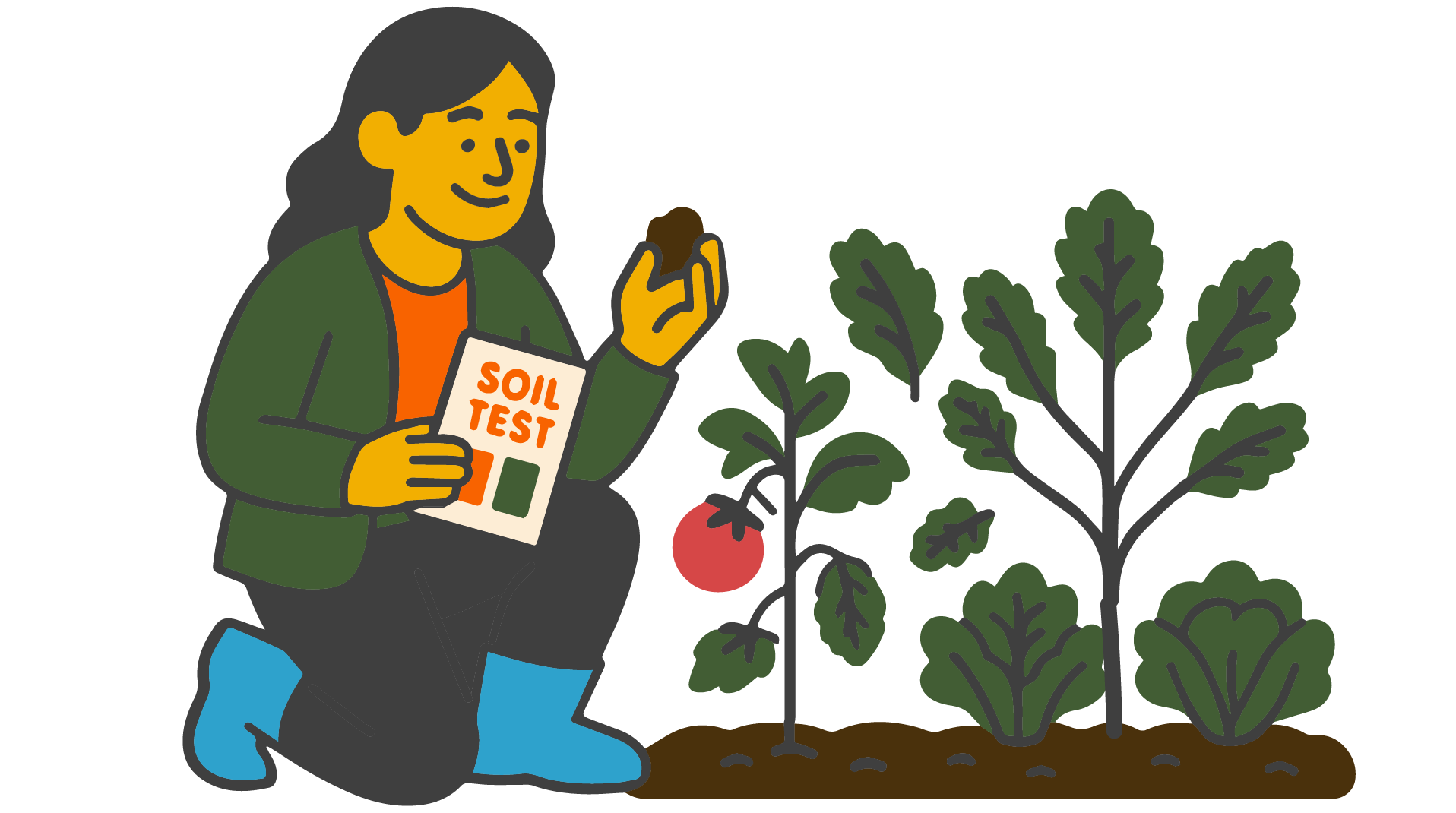
You did the responsible thing and got a soil test. Great. Now you are staring at a sheet of numbers and words like pH, nitrate, phosphorus and organic matter and thinking, “What am I supposed to do with this?”
This guide is here to bridge that gap. You do not need to become a soil scientist. You just need to translate your soil test into:
- A simple decision about pH
- One or two moves to improve soil structure and organic matter
- A basic feeding schedule for the season
We will walk from soil test to first harvest in plain language, then show how to log your steps in Crop Help so you remember what you changed and how plants responded.
What to do after you get soil test results
When you first open your soil test, skip past the long explanation and focus on four things:
- pH – how acidic or alkaline your soil is
- Macronutrients – usually nitrogen (N), phosphorus (P) and potassium (K)
- Organic matter – how much “life fuel” is in your soil
- Any notes or recommendations the lab provides
Then ask two simple questions:
- Is my pH close to the range most vegetables like (about 6.0 to 7.0)?
- Are there any nutrients that are clearly very low or very high?
From there, pick one or two realistic fixes for this season. You do not need to fix everything at once. Soil improvement is a multi-year story.
How to read your soil test like a gardener
Why pH around 6 to 7 is the sweet spot
pH tells you how acidic or alkaline the soil is on a scale from 0 to 14:
- Below 7 is acidic
- 7 is neutral
- Above 7 is alkaline
Most vegetables are happiest when soil pH is roughly between 6.0 and 7.0. In that range, nutrients like nitrogen, phosphorus and potassium are easier for plants to take up. Outside that range, nutrients can get “locked up” even if the test says they are present.
If your test shows:
- pH 5.0–5.5 – quite acidic for many crops; you may need to raise pH with lime over time
- pH 7.5–8.0+ – quite alkaline; you may need to lower pH slightly in vegetable beds with sulfur or organic matter
You do not have to hit a perfect number. The goal is to move from “problem range” toward “good enough for most vegetables.”
Macronutrients and common deficiency patterns
Soil tests usually report N, P and K as:
- Levels (low, medium, high, very high)
- Or as numbers with a lab interpretation
For a beginner, focus on the lab’s low/medium/high markings:
- Nitrogen (N) – fuels leafy growth. Low N can show up as pale plants and slow growth.
- Phosphorus (P) – supports roots and flowers. Very low P can mean poor root systems and weak fruiting.
- Potassium (K) – helps overall vigor and disease tolerance. Low K can show as weak stems and poor stress response.
If your test says all three are “medium” or higher, you probably do not need heavy fertilizer this season—especially if you add compost. If one is marked “low,” you can target that with your feeding plan rather than throwing generic fertilizer at the problem.
Step by step plan for adjusting pH safely
pH changes slowly. That is good news, because slow change is safer for plants and soil life.
If your soil is too acidic
If your pH is well below 6 and your lab recommends lime:
- Follow the application rate from the lab or their handbook.
- Use agricultural lime (finely ground) rather than random construction lime.
- Spread it evenly over the bed or area and lightly mix it into the top 10–15 cm (4–6 inches).
Do not try to push pH all the way to neutral in one season. It is better to:
- Aim for a small shift (for example from 5.5 to 6.0–6.3)
- Apply more again in a year or two if needed
If your soil is too alkaline
If your pH is above 7.5 in a vegetable area:
- Look for a lab recommendation for elemental sulfur.
- Apply it at the suggested rate, again mixing only into the top layer.
- Add extra organic matter (compost, mulches) which can help buffer pH over time.
Alkaline soils can be stubborn. You may choose to group crops that tolerate higher pH (like many brassicas) in those beds and grow more sensitive crops (like blueberries) in containers or raised beds with tailored mixes.
Be patient and gentle
Big, sudden swings in pH can harm roots and the microbial life you are trying to support. Expect changes over months to years, not days. Retest every few years to see how your efforts are working.
Adding organic matter without overwhelming your beds
Organic matter is like the “engine” of healthy soil. It:
- Improves structure and drainage
- Helps soil hold both water and air
- Feeds microbes that recycle nutrients
You do not need to bury your garden in compost to see benefits. In fact, adding too much too quickly can cause salt and nutrient imbalances.
Compost basics
For most home gardens:
- Aim to add 1–2 cm (about half an inch) of finished compost on top of beds once or twice a year.
- Gently mix it into the top few centimeters or let worms pull it down if your soil is already loose.
If your soil test mentions very high phosphorus, go a bit lighter on compost rich in manure, and balance with other organic materials like leaf mold.
Leaf mold and mulch
Leaf mold (partially decomposed leaves) and mulches made from leaves, straw or wood chips (for paths and perennials) help:
- Build structure over time
- Protect the soil surface from pounding rain and sun
- Create a home for fungi and other beneficial organisms
You can layer these on top of your compost rather than instead of it. Just keep thick woody mulches out of the planting zone for annual vegetables.
Cover crops
Cover crops are plants grown not to harvest but to feed the soil:
- In small gardens, they might be a simple fall sowing of rye or clover.
- On larger plots, you might rotate beds through mixes of grasses and legumes.
Your soil health checklist in Resources can give you more ideas here. The main point: you do not have to add all the organic matter from a bag. Plants can help do the work too.
Organic feeding schedule for the season
Once pH and organic matter are on your radar, you can build a simple feeding schedule around what your soil test showed.
Slow release vs quick acting
Think of soil fertility in two layers:
- Slow release: compost, manure, rock minerals and cover crops feed the soil and plants over months.
- Quick acting: liquid feeds or more soluble organic fertilizers give plants a short-term boost.
A beginner friendly plan:
-
At bed prep:
- Add a light layer of compost over the surface.
- If the test showed a clear deficiency (say low phosphorus), add a targeted amendment at the recommended rate.
-
During the season:
- For heavy feeders like tomatoes and squash, apply a light liquid feed every 2–4 weeks.
- For leafy greens, feed lightly if they start to pale and your soil test suggests low nitrogen.
Avoid the temptation to “fix” every pale leaf with more fertilizer. Overfeeding can stress plants and soil life just as much as underfeeding.
Spotting and fixing nutrient problems in plants
Your soil test is a starting point, but plants will keep giving you feedback all season.
Common patterns to watch:
- Yellow lower leaves, green top – often nitrogen related, but also tied to age and shading.
- Purple or reddish tones on young leaves – sometimes linked to phosphorus stress, especially in cold soils.
- Weak stems and poor fruit set – can involve potassium or general stress.
- Overall stunting – may reflect multiple factors: compaction, water, nutrients or root damage.
When you see something odd:
- Take clear photos of affected and healthy plants.
- Log an Issue in Crop Help with what you see and where.
- Compare your plants to trusted nutrient deficiency charts and your soil health checklist.
- Make a small, targeted change (for example, a modest nitrogen boost or better watering) and watch for improvement.
Over time, you will get better at connecting what you see above ground with what your soil test told you.
Logging soil and fertility changes in Crop Help
Soil change is slow. That makes it easy to forget what you did last year when you look at this year’s results. Crop Help can be your soil memory.
Create Tasks and Issues for key actions
Examples:
- Task: “Apply lime to bed A based on 2025 soil test”
- Task: “Top dress compost on all raised beds – spring”
- Issue: “Low organic matter in north field – multi year plan”
- Task: “Sow fall cover crop mix in north field”
When you complete a Task:
- Add a quick note: what you used, roughly how much, and any conditions (for example, “light rain after application”).
These details will matter when you compare future soil tests or plant performance.
Attach soil tests and checklists
You can:
- Upload photos or files of your soil test reports into relevant Issues.
- Link to your soil health checklist and mark which practices you are trying in each bed or field.
That way, when you look back in a year or two, you are not guessing why a bed improved. You can see the story: pH adjustment, compost additions, cover crops, and a more tuned feeding plan.
What to do next
You do not have to fix your soil all at once to have a good season. Start with a small, realistic plan.
Over the next few weeks:
- Look at your soil test and decide on one pH move (if needed) and one organic matter move (like compost or cover crop).
- Build a simple feeding schedule for heavy feeders and greens based on your test results.
- In Crop Help, create Tasks for “Apply lime or sulfur,” “Add compost,” and “First mid-season feed.”
- As you plant and water (with help from Watering 101 and your May Garden Playbook), take photos and notes any time plants look unusually happy or stressed.
- Plan to retest soil in a few years to see how your efforts are paying off.
From soil test to first harvest, the real goal is not perfection. It is steady progress toward soil that is easier to work, holds water well, feeds plants reliably and supports a garden you enjoy growing in. With Crop Help keeping track of your moves, each season becomes one clear step in that direction instead of a blur you hope to remember later.